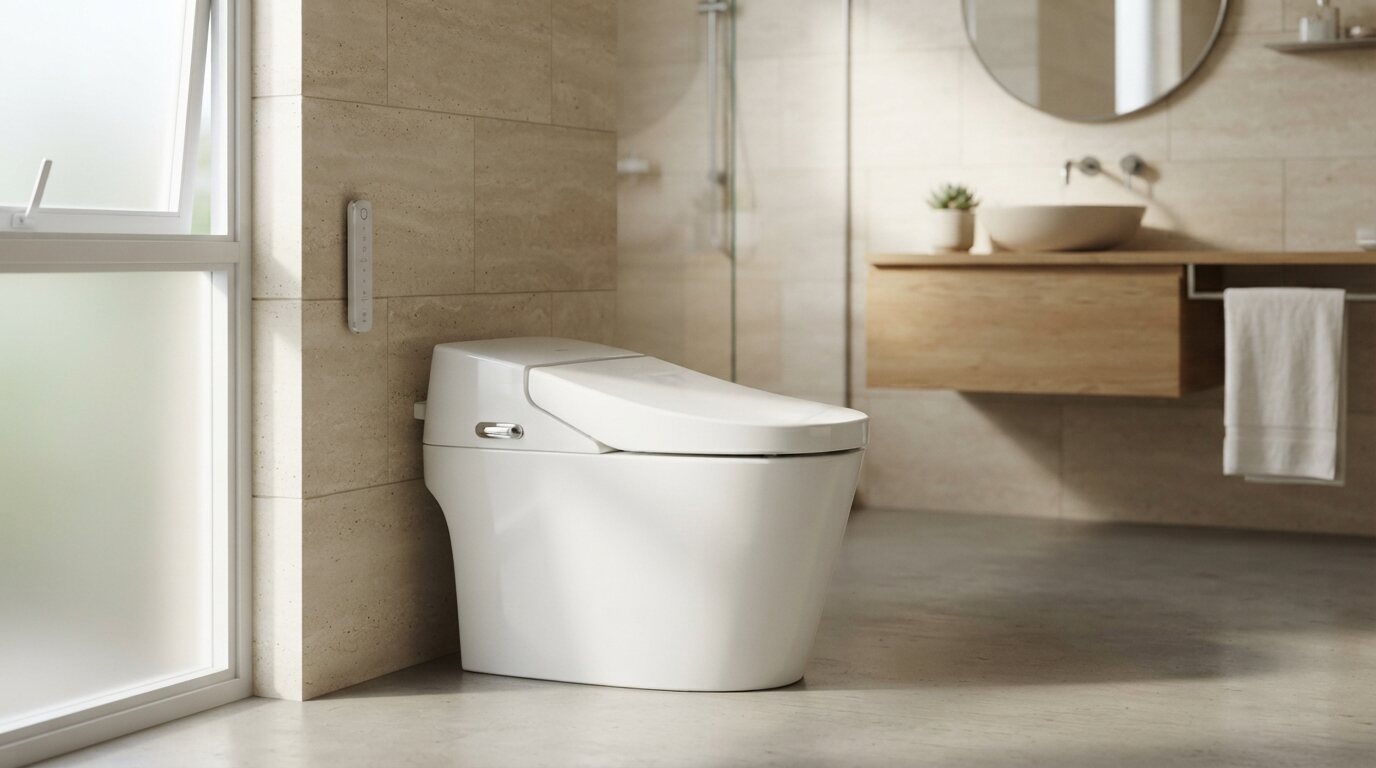
Smart toilets are becoming a popular choice for modern homes and commercial spaces worldwide, offering enhanced hygiene, comfort, and convenience. China has emerged as a major manufacturing hub for these advanced fixtures, providing a wide range of models that combine innovative technology with competitive pricing. However, purchasing a smart toilet from China requires careful consideration of various technical specifications, certifications, and practical details to ensure it meets your specific project requirements and local standards.
As independent sourcing agents based in Foshan, China, we regularly assist buyers – from villa owners to large-scale developers and importers – in navigating the complexities of the Chinese building materials market. When it comes to smart toilets, understanding features like voltage compatibility, required certifications, water pressure, and the availability of spare parts is crucial. This guide will walk you through the essential aspects of sourcing a high-quality smart toilet from China.
Key Features of Smart Toilets from China
Modern smart toilets from China offer a comprehensive suite of features designed to elevate the bathroom experience. Understanding these options will help you choose the right model for your needs.
Bidet Functions for Enhanced Hygiene
- Adjustable Water Temperature and Pressure: Most models allow users to customize the water temperature (typically 3-5 levels, from ambient to around 40°C) and spray intensity.
- Nozzle Position: Front (feminine) and rear (posterior) wash functions are standard, often with adjustable nozzle positions to ensure thorough cleaning for different body types.
- Specialized Sprays: Look for features like pulsating spray (for massage effect) or oscillating spray (for wider cleaning area).
- Self-Cleaning Nozzles: Many smart toilets feature nozzles that rinse themselves before and after each use, some even with UV sterilization for added hygiene.
Comfort and Convenience Features
- Heated Seats: A highly sought-after comfort feature, especially in colder climates. Seats typically offer 3-5 temperature settings, ranging from ambient to around 40°C. Some models include a sensor that heats the seat only when occupied.
- Warm Air Dryer: After washing, a warm air dryer (with adjustable temperature) provides a hands-free drying experience, reducing the need for toilet paper.
- Automatic Deodorization: Built-in activated carbon filters or fan systems help neutralize odors, maintaining a fresh bathroom environment.
- Automatic Flushing: Many smart toilets can detect when a user stands up and automatically flush. Some also offer a foot-kick sensor or remote control flush.
- Soft-Close Lid and Seat: Prevents slamming and reduces noise. Premium models may feature automatic open/close lids that activate upon approach.
- Night Light: An integrated LED light illuminates the bowl, making it easier to use the toilet in the dark without turning on bright overhead lights.
- Remote Control and App Integration: Handheld or wall-mounted remote controls are standard. High-end models may offer smartphone app control for personalized settings and diagnostics.
Voltage and Power Requirements for Your Smart Toilet China Purchase
One of the most critical technical considerations when importing any electronic appliance from China, including a smart toilet, is voltage compatibility. China primarily uses a 220V/50Hz electrical standard. Many international markets, however, operate on different standards, such as 110V/60Hz (e.g., USA, Canada, parts of Japan) or 230-240V/50Hz (e.g., Europe, Australia, UK).
- Confirm Before Ordering: It is absolutely essential to confirm the required voltage and frequency for your project location with the factory before placing an order. Installing a 220V appliance in a 110V system without a proper transformer will not work and can damage the unit or pose safety risks.
- 110V Models: While most Chinese factories default to 220V, many larger manufacturers produce models specifically for 110V markets. These models might have a slightly higher unit cost or require a longer lead time for production, as they are often made in specific batches.
- Dedicated Circuit: Smart toilets, especially those with powerful heaters for water and seats, typically require a dedicated electrical circuit. Confirm the wattage and amperage draw of the chosen model to ensure your electrical system can support it safely. A typical smart toilet might draw between 1000W and 1600W.
- Plug Type: Don’t forget to specify the correct plug type (e.g., Type A/B for North America, Type G for UK, Type I for Australia, Type C/F for Europe) to avoid needing adapters upon arrival.
Certifications and Standards: Ensuring Compliance
Compliance with local electrical and plumbing standards is non-negotiable for safety and legal reasons. Different regions have different certification requirements. Always ask for copies of relevant certificates and verify their validity and scope.
- CE Certification (Europe): This is a self-declaration by the manufacturer that the product meets EU safety, health, and environmental protection requirements. Most smart toilets from China destined for European markets will have CE certification.
- UL Certification (USA/Canada): Underwriters Laboratories (UL) certification is often required or highly recommended for electrical products sold in North America. Obtaining UL certification is a rigorous and expensive process for manufacturers, involving extensive testing and factory audits. As a result, not all Chinese smart toilet factories, or even all models within a factory’s range, will carry UL certification. If UL is a must for your market, expect higher unit costs and fewer available models.
- Watermark (Australia/New Zealand): This certification is crucial for plumbing products in Australia and New Zealand, ensuring they meet specific quality and safety standards for water supply.
- Other Regional Certifications: Depending on your target market, you might need SASO (Saudi Arabia), KC (Korea), SAA (Australia/NZ for electrical safety), or other specific local approvals.
- Verification: Always ask factories to provide copies of their certifications. Cross-reference these with the certifying body’s database if possible to ensure they are current and apply to the specific model you are purchasing. Be wary of factories that claim certifications without being able to provide documentation.
Water Pressure and Installation Considerations
Proper functioning of a smart toilet heavily relies on adequate water pressure and correct installation. These factors are often overlooked but are critical for user satisfaction.
- Minimum Water Pressure: Most smart toilets require a minimum dynamic water pressure, typically around 0.15 MPa to 0.2 MPa (1.5 to 2 bar, or 22 to 29 PSI). Tankless models, which heat water on demand, often require higher pressure and flow rates to operate effectively. If your building’s water pressure is lower than this, consider models with an internal water tank or a built-in booster pump, though these are less common for basic models.
- Tank vs. Tankless Design:
- Tankless: These models heat water instantly, offering continuous warm water. They are generally more compact and energy-efficient but demand higher, consistent water pressure.
- With Internal Tank: These models have a small reservoir that stores and heats water. They are more forgiving with lower water pressure but have a limited supply of warm water before needing to reheat.
- Rough-in Distance (S-trap vs. P-trap): This refers to the distance from the finished wall to the center of the drainpipe.
- S-trap (Floor Drain): Common rough-in distances are 300mm and 400mm. Measure your existing plumbing carefully.
- P-trap (Wall Drain): Less common for smart toilets, but some models are available. Typical P-trap rough-in is 180mm.
- Water Inlet Position: Confirm where the water inlet connection is located on the smart toilet (e.g., behind the unit, left, or right) and ensure it aligns with your bathroom’s water supply line.
- For a broader overview of bathroom fixtures, you might find our sanitary ware catalog helpful.
Ensuring the correct rough-in distance is vital. An incorrect measurement means the toilet will not fit your plumbing, leading to costly modifications or the need to return the product. Always double-check this with your plumber before ordering.
Spare Parts and After-Sales Support
A smart toilet is an electronic appliance with moving parts and sensors. Like any complex device, it may eventually require maintenance or replacement parts. Planning for spare parts is crucial for the long-term usability of your purchase.
- Availability of Key Spares: Before committing to a supplier, ask about the availability and pricing of essential spare parts. Key components include the main control board, bidet nozzle assembly, heating element, water pump, remote control, and sensors.
- Warranty: Most reputable manufacturers offer a warranty, typically 1 to 3 years, on the main electronic components. Understand what the warranty covers, the process for making claims, and who bears the shipping cost for replacement parts.
- Common Failure Points: Heating elements (for water or seat) and electronic control boards are often the first components to fail in a smart toilet. Sensors (for seat occupancy, auto-flush) can also occasionally malfunction.
- Ordering Spares: Clarify the process for ordering spares. Will you need to provide the original order number or product serial number? What are the typical lead times for spare parts? For large projects, consider ordering a small percentage of critical spare parts (e.g., 2-5% of your total order quantity) along with your main shipment to have them readily available.
- Technical Support: Enquire about the level of technical support offered by the factory. Can they provide troubleshooting guides or video instructions for common issues?
Smart Toilet China: Price Ranges and Quality Tiers
The price of a smart toilet from China can vary significantly based on features, brand, certifications, and overall build quality. Foshan is a major hub for sanitary ware, and you’ll find a wide range of options here.
| Category | Typical Price Range (FOB China Port) | Key Features & Quality | Typical MOQ |
|---|---|---|---|
| Basic Models | $200 – $400 USD | Essential bidet functions (wash, temp/pressure adjust), heated seat, basic soft-close lid, simple remote, siphonic flush. Often OEM/no-name brands. | 20-50 units |
| Mid-Range Models | $400 – $800 USD | Expanded bidet features (oscillating/pulsating, self-cleaning nozzle), warm air dryer, deodorizer, auto-flush, night light, more robust build, better materials, some factory brands. May include basic CE certification. | 10-30 units |
| High-End Models | $800 – $1500+ USD | Comprehensive features (auto-open/close lid, foot sensor, advanced remote/app control, UV sterilization, premium design, higher quality ceramic and components), stronger warranty. Often from established factory brands, more likely to have specific regional certifications (e.g., UL, Watermark). | 5-10 units |
Factors Influencing Price:
- Features: More advanced functions (e.g., auto-open/close, UV sterilization, app control) increase the price.
- Certifications: Products with specific certifications like UL or Watermark are significantly more expensive due to the cost of testing and compliance.
- Material Quality: The quality of ceramic, plastic components, and internal electronics varies. High-end models use more durable and aesthetically pleasing materials.
- Brand: Well-known Chinese sanitary ware brands (e.g., Huida, TOTO-like quality local brands) will command higher prices than generic OEM products.
- Minimum Order Quantity (MOQ): Factories usually have MOQs. Smaller orders might be possible but often at a higher per-unit price. For larger projects, we often help buyers consolidate orders across different Foshan building materials markets to meet MOQs.
What to Confirm Before Ordering: A Checklist
To avoid costly mistakes and ensure a smooth purchasing process, use this checklist:
- Voltage & Frequency: 110V/60Hz or 220V/50Hz (or other)?
- Plug Type: Specify the correct plug for your region.
- Certifications: Which certifications are required (e.g., CE, UL, Watermark)? Request valid copies.
- Water Pressure: Confirm the minimum required pressure and ensure your site meets it.
- Rough-in Distance: S-trap (300mm or 400mm) or P-trap (180mm)? Measure precisely.
- Key Features: List all essential bidet functions, comfort features, and flushing mechanisms.
- Spare Parts: Confirm availability and pricing for critical spares (control board, nozzle, heating element).
- Warranty: Understand the warranty terms and claims process.
- MOQ: Confirm the minimum order quantity and lead time.
- Installation Manual: Request an English version of the installation and user manual.
Navigating the vast market of smart toilets in China, especially with the technical nuances of voltage, certifications, and installation, can be challenging. As your sourcing agent, we simplify this process by verifying specifications, confirming factory capabilities, and managing quality control to ensure your smart toilets meet all your requirements. Learn more about how we assist with your purchases on our sourcing agent services page.
By paying close attention to these details, you can confidently source high-quality smart toilets from China that enhance comfort and hygiene for your projects, ensuring long-term satisfaction and performance.
Planning to buy building materials in Foshan?
Tell us what you need and when you plan to come. We reply the same day with a realistic plan, price ranges and which markets to visit.