When you purchase tiles directly from a Chinese factory, understanding how they grade and pack their products is just as important as choosing the right design and price. Mistakes in grading, shade, or packing can lead to costly delays, installation issues, and project setbacks.
This guide will walk you through the essential aspects of tile packing export China, from quality classification to container loading, ensuring you know exactly what to specify on your Proforma Invoice (PI) and what to expect upon arrival.
Tile Grades: What “First Grade” Really Means
Tile factories classify their products into different grades based on quality and defect levels. For most export orders, especially for villas, apartments, or commercial projects, you should always specify “First Grade” or “Grade A” tiles. This is the highest quality available and what most buyers expect.
- First Grade (Grade A): These tiles meet the highest quality standards with minimal to no visible defects. They have consistent dimensions, flat surfaces, and uniform glazes (for glazed tiles). Any minor imperfections would be almost imperceptible and within industry-accepted tolerances. First Grade tiles are suitable for all applications where aesthetics and performance are critical.
- Second Grade (Grade B): These tiles have minor, noticeable defects that prevent them from being classified as First Grade. Common issues include small chips on edges, slight color variations, minor surface blemishes, or slight dimensional inconsistencies. Factories might sell these at a significant discount, typically 10-30% less than First Grade. While cheaper, they are generally not recommended for projects requiring a pristine finish or for areas with high visibility. Some buyers use them for back-of-house areas or temporary installations.
- Commercial Grade / Standard Grade: This term can be ambiguous. Sometimes it’s used synonymously with Second Grade, or it might refer to tiles with slightly more pronounced defects. It’s crucial to get samples and a clear definition from the factory if this grade is offered. We generally advise against purchasing tiles labeled solely as “Commercial Grade” without a precise understanding of the defect tolerance.
- Off-Grade / Factory Seconds: These are tiles with significant defects, often sold at very low prices. They might have large chips, cracks, severe color variations, or major dimensional issues. These are typically sold locally for very basic, non-critical applications or as clearance stock. Never purchase these for export unless you have personally inspected them and understand the risks.
Our Recommendation: Always specify “First Grade” on your PI. If a factory offers a lower grade at a tempting price, ask for detailed photos or video inspections of the specific batch, and understand the implications for your project.
Shade Variation: Keeping Your Project Consistent
Even with advanced manufacturing, slight color differences can occur between different production batches of the same tile design. This is known as “shade variation” or “tone variation.” Factories manage this by assigning a unique “shade number” or “tone code” to each batch.
- Why it matters: If tiles from different shade numbers are installed together in the same area, the color differences can become very apparent, leading to a patchy or inconsistent look. This is a common and frustrating issue for installers and project owners.
- How factories manage it: After firing, tiles are sorted by automated machines or manually into different shade groups. Each carton is then marked with its specific shade number (e.g., A01, B12, C05).
- What to do: Ensure that all tiles for a single project area come from the same shade number. When placing your order, calculate your required quantity carefully, adding at least 10-15% extra for cuts, breakages, and future repairs. This ensures you receive enough tiles from a single production run and shade. If you need to reorder tiles for an existing project, always provide the factory with the original shade number from your previous purchase.
- Checking on arrival: Before installation begins, open several cartons from different pallets and visually inspect the tiles under good lighting to confirm shade consistency.
Calibre (Size Variation): Ensuring a Smooth Installation
“Calibre” refers to the actual size of the tile, which can vary slightly from the nominal size due to the firing process. Like shade, factories sort tiles by calibre and assign a “calibre number” or “size code” to each batch.
- Why it matters: Even small differences in tile dimensions (e.g., +/- 0.5mm) can cause significant problems during installation, making it difficult to achieve straight grout lines or a level surface, especially with narrow joints.
- Tolerance levels: For First Grade tiles, the industry standard for size variation is typically very tight, often within +/- 0.5mm or +/- 0.3%. Rectified tiles, which have their edges mechanically cut after firing, offer even tighter tolerances, often +/- 0.1mm, making them ideal for minimal grout lines.
- What to do: Similar to shade, ensure all tiles for a specific area come from the same calibre number. Always specify rectified tiles if you desire very narrow grout lines (e.g., 1-2mm). For non-rectified tiles, a grout line of 3mm or more is generally recommended to accommodate slight variations.
- Checking on arrival: Before installation, check a few tiles from different cartons with a measuring tape to ensure they are consistent in size.
Essential Carton Markings for Tile Packing Export China
The information printed on each tile carton is critical for logistics, inventory management, and ensuring you received the correct product. Ensure your factory understands the importance of clear and accurate markings.
Typically, each carton should clearly display the following information:
- Product Name / Model Number: Your specific SKU or the factory’s internal product code.
- Tile Size: The nominal size (e.g., 600x600mm, 300x600mm).
- Grade: Clearly state “First Grade” or “Grade A.”
- Shade Number: The specific color batch code (e.g., A01, B12).
- Calibre Number: The specific size batch code (e.g., C1, C2).
- Quantity per Carton: Number of pieces and total square meters (SQM) or square feet (SQFT).
- Net Weight / Gross Weight: Weight of tiles only and total weight including carton.
- Country of Origin: “Made in China.”
- Batch Number / Production Date: Useful for traceability.
- Factory Name / Logo: Often included for branding.
Common Mistakes: Missing information, incorrect shade/calibre numbers, or inconsistent markings across cartons. Always check a sample carton marking before mass production begins.
Palletizing Tiles for Safe Transit
How your tiles are packed onto pallets significantly impacts their safety during transit and ease of unloading at your destination.
- Types of Pallets:
- Wooden Pallets: Most common. For international shipping, they must be heat-treated and stamped with the IPPC (International Plant Protection Convention) mark to prevent the spread of pests. Ensure your factory provides a fumigation certificate if using wooden pallets.
- Plastic Pallets: More expensive but lighter, durable, and do not require fumigation. Less common for heavy tile shipments due to cost and load bearing capacity limitations.
- Pallet Dimensions: Typically 110x110cm or 100x120cm. Confirm with your freight forwarder if you have specific requirements for container loading or warehouse equipment.
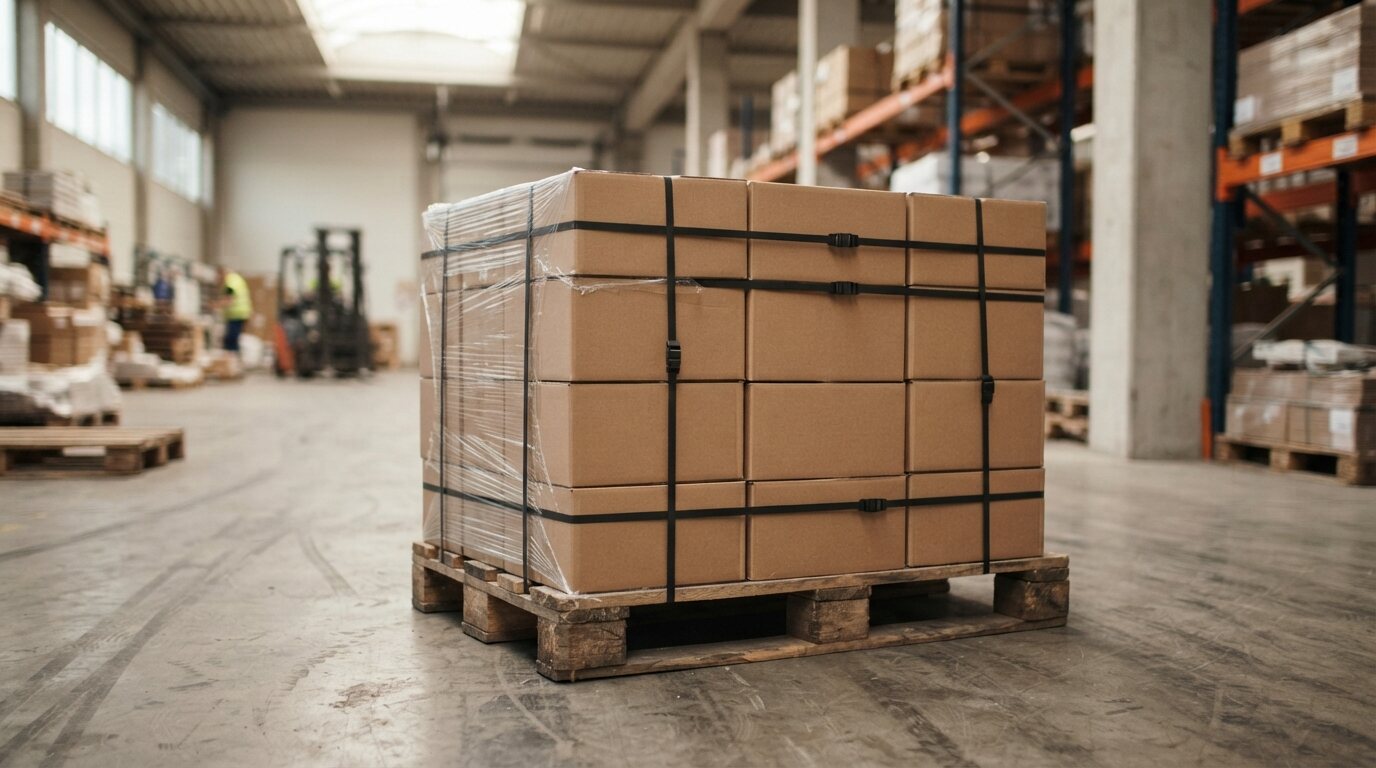
- Stacking and Wrapping: Tiles are usually stacked face-to-face and back-to-back to protect the tile surface. The stack is then secured with plastic straps, corner protectors, and multiple layers of shrink-wrap film to prevent shifting and damage. Good factories will also place a cardboard sheet between layers for added stability.
- Cost Implications: Palletization adds to the overall cost. Expect to pay an extra USD 5-15 per pallet, plus around USD 30-50 for a fumigation certificate if required. This cost is usually included in the EXW or FOB price if you specify palletization.
Maximizing Container Space and Weight
Loading tiles efficiently into shipping containers is a balancing act between maximizing quantity and ensuring safe delivery. The two main methods are loose carton loading and palletized loading.
Loose Carton Loading vs. Palletized Loading
This decision impacts your shipping costs, unloading process, and risk of damage. Here’s a comparison:
| Feature | Loose Carton Loading | Palletized Loading |
|---|---|---|
| Container Space | Maximized (more SQM per container) | Less efficient (pallets take up space, fewer SQM) |
| Loading Cost (Factory) | Lower (less material, more manual labor at factory) | Higher (pallets, strapping, wrapping) |
| Unloading Cost (Destination) | Higher (manual labor required, slower) | Lower (forklift can be used, faster) |
| Damage Risk | Higher (cartons can shift, get crushed, especially if not packed tightly) | Lower (stable, protected by pallets and wrapping) |
| Time (Unloading) | Slower (can take 1-2 days for a 20GP) | Faster (a few hours for a 20GP) |
| Suitable For | Cost-sensitive buyers, projects with ample manual labor, destinations with strict weight limits per carton. | Buyers prioritizing safety, efficiency, large projects, destinations with forklift access. |
Container Types and Weight Limits
The most common container types for tiles are 20GP (20-foot General Purpose) and 40HQ (40-foot High Cube).
- 20GP Container: Max gross weight (container + cargo) is typically around 24-30 tons, but the actual cargo weight limit is often 21-28 tons, depending on the shipping line and destination country’s road weight restrictions. This is the most common container for tiles due to the high density/weight of ceramic and porcelain tiles.
- 40GP / 40HQ Container: Max gross weight is similar to 20GP (around 26-30 tons). However, because these containers are longer/taller, they can hold more volume but not necessarily more weight. For heavy items like tiles, you will almost always hit the weight limit before the volume limit in a 40-foot container. Therefore, 40-foot containers are less common for tiles unless you are shipping very light tiles or a mix of tiles and other lighter building materials.
Calculating Tile Quantity:
Tile weight varies significantly by thickness and material. For example, a 600x600mm porcelain tile (typically 9-10mm thick) weighs approximately 22-25 kg per square meter. A 20GP container with a 27-ton cargo limit can hold roughly 1000-1200 SQM of such tiles if loose loaded, or slightly less if palletized.
Always confirm the exact tile weight per square meter with your factory and cross-reference with your freight forwarder on the maximum permissible cargo weight for your destination. Exceeding weight limits can result in hefty fines and delays at the port of discharge. For more details on this, see our guide on shipping from China.
What to Confirm Before Ordering (Checklist for Your PI)
To avoid misunderstandings and ensure a smooth transaction, explicitly state these details on your Proforma Invoice (PI) and in your communications:
- Tile Grade: Clearly specify “First Grade” for all items.
- Shade and Calibre: Request that all tiles for a single SKU/project come from the same shade and calibre number.
- Carton Markings: Approve the exact content and layout of carton markings.
- Palletization Method: State whether you require loose loading or palletized loading.
- Pallet Type: If palletized, specify wooden (with IPPC mark and fumigation certificate) or plastic pallets.
- Container Loading: Confirm the factory will load the container to the maximum legal weight limit for your destination.
- Lead Time: Agree on the production and packing lead time.
- Documentation: Confirm all necessary export documents, including the packing list and bill of lading, will reflect these details.
Navigating these details can be complex, especially for large orders. Our sourcing agent service helps you ensure that your tile orders are graded, packed, and loaded correctly, minimizing risks and delays. We check carton markings, supervise loading, and verify documentation, providing peace of mind from factory to destination. For general questions about the process, check our FAQ page.
By paying close attention to these aspects of tile grading and packing, you can significantly reduce potential problems and ensure your project receives the quality and consistency it deserves. Clear communication with your Chinese tile factory is your best tool for success.
Planning to buy building materials in Foshan?
Tell us what you need and when you plan to come. We reply the same day with a realistic plan, price ranges and which markets to visit.