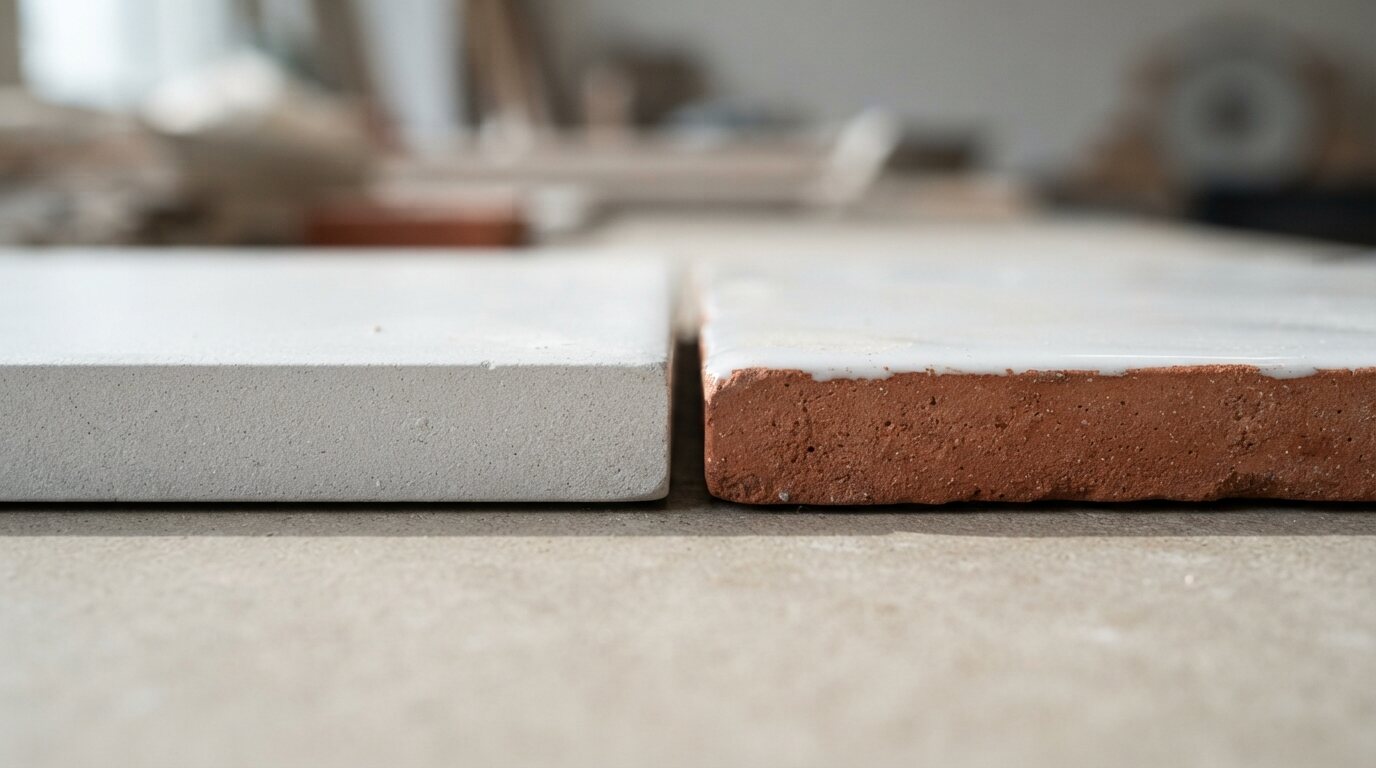
When you’re importing building materials from China, especially tiles, you’ll constantly encounter the terms “porcelain” and “ceramic.” While often used interchangeably in casual conversation, there’s a significant difference between them that impacts performance, cost, and suitability for your project. Understanding this distinction is crucial for making informed purchasing decisions, particularly when sourcing from the world’s largest tile manufacturing hub, Foshan.
This guide will break down the key differences between porcelain and ceramic tiles, focusing on the technical specifications, practical implications, and how these are handled by Chinese factories and customs. We’ll help you navigate the options to ensure you select the right tile for your specific needs, whether for a villa, a large development, or for your import business.
The Fundamental Difference: Water Absorption Rate
The most critical and universally accepted technical difference between porcelain and ceramic tiles lies in their water absorption rate. This isn’t just a technical detail; it’s the foundation for almost all other performance characteristics.
- Porcelain Tiles: By international standards (like ISO 13006, which many Chinese factories adhere to), a tile is classified as porcelain if its water absorption rate is 0.5% or less. This extremely low porosity means the tile is very dense and resistant to moisture.
- Ceramic Tiles (Non-Porcelain): These tiles have a water absorption rate greater than 0.5%, typically ranging from 3% to 10% or even higher. This higher porosity makes them less dense and more susceptible to moisture.
This difference in water absorption directly influences a tile’s density, strength, and resistance to environmental factors like frost. For example, a tile with high water absorption will absorb water, and if that water freezes, it expands, potentially cracking or damaging the tile body. This is why porcelain is suitable for outdoor use in cold climates, while standard ceramic is not.
Body Composition and Manufacturing Process
The water absorption rate is a direct result of the raw materials used and the manufacturing process, particularly the firing temperature.
Ceramic Tile Body (Non-Porcelain)
Traditional ceramic tiles are typically made from a coarser blend of red or white clay, sand, and flux. This mixture is pressed into shape and then fired at relatively lower temperatures, usually between 900°C and 1100°C. The lower firing temperature and coarser materials result in a tile body that is less dense and more porous. Because the body itself is more absorbent and less durable, ceramic tiles almost always have a glazed surface. This glaze provides the aesthetic finish, protects the body from stains and moisture, and adds to its wear resistance. If the glaze chips, the porous body underneath is exposed.
Porcelain Tile Body
Porcelain tiles are manufactured using a much finer, purer, and denser blend of clays, including kaolin, feldspar, and quartz. This refined mixture is pressed at higher pressures and then fired at significantly higher temperatures, typically between 1200°C and 1400°C. This intense heat causes the particles to vitrify – essentially melting and fusing together to form a glass-like, non-porous, and extremely dense body. This vitrification is what gives porcelain its characteristic low water absorption.
There are two main types of porcelain tiles:
- Full Body Porcelain (Unglazed Porcelain): Also known as through-body porcelain, these tiles have a consistent color and composition throughout their entire thickness. If a chip occurs, the color underneath is the same as the surface, making damage less noticeable. They are extremely durable and often used in high-traffic commercial settings.
- Glazed Porcelain: These tiles have a porcelain body with a layer of glaze applied to the surface, similar to ceramic tiles. The glaze allows for a vast array of colors, patterns, and finishes (polished, matte, rustic, wood-look, stone-look). While the glaze itself can chip, the underlying porcelain body maintains its low water absorption and strength. This is the most common type of porcelain tile you’ll find for residential and many commercial applications.
Key Performance Characteristics and Use Cases
The differences in composition and manufacturing translate into distinct performance characteristics, dictating where each type of tile is best suited.
Durability and Hardness
- Porcelain: Extremely hard and dense, making it highly resistant to scratches, chips, and heavy impact. It holds up exceptionally well in high-traffic areas, both residential and commercial. For glazed porcelain, the PEI (Porcelain Enamel Institute) rating indicates the glaze’s resistance to abrasion, ranging from PEI 1 (light traffic) to PEI 5 (heavy commercial traffic).
- Ceramic: Generally softer and more prone to chipping and scratching, especially the glaze. It’s best suited for walls and light to moderate traffic residential floors.
Stain Resistance
- Porcelain: Due to its extremely low porosity, porcelain is highly resistant to stains. Spills tend to sit on the surface rather than being absorbed.
- Ceramic: The glazed surface provides good stain resistance. However, if the glaze is damaged or worn, the porous body underneath can absorb liquids and stain easily.
Frost Resistance
- Porcelain: Excellent frost resistance. Because it absorbs very little water, there’s minimal risk of water freezing and expanding within the tile, making it ideal for outdoor applications in cold climates.
- Ceramic: Not frost-resistant. Water absorbed by the tile body can freeze, expand, and cause the tile to crack or delaminate. Therefore, ceramic tiles are generally unsuitable for outdoor use in areas that experience freezing temperatures.
Areas of Application
- Porcelain: Due to its superior durability, low water absorption, and frost resistance, porcelain is suitable for almost any application: high-traffic commercial floors, outdoor patios, pool surrounds, bathrooms, kitchens, entire home flooring, and even wall cladding.
- Ceramic: Best for interior wall applications (e.g., kitchen backsplashes, bathroom walls) and light-traffic residential floors where there’s no risk of freezing.
Price Gap and Cost Considerations for porcelain vs ceramic tiles China
When importing from China, you’ll notice a clear price difference between porcelain and ceramic tiles. Porcelain is generally more expensive per square meter, reflecting its higher quality raw materials, more complex manufacturing process, and superior performance.
- Ceramic Tile Pricing: Typically, you can expect glazed ceramic tiles to range from $5 to $20 per square meter FOB China, depending on size, design complexity, and quality. Smaller, simpler wall tiles will be at the lower end, while larger format or intricately designed floor ceramics will be higher.
- Porcelain Tile Pricing: Porcelain tiles usually start from around $8 and can go up to $35 or more per square meter FOB China. Full body porcelain, large format tiles (e.g., 1200x2400mm), highly polished finishes, or advanced digital printing technologies will command higher prices.
Factors influencing the price include:
- Raw Materials: Finer clays and additives for porcelain are more costly.
- Energy Consumption: Higher firing temperatures for porcelain require more energy.
- Production Complexity: Polishing porcelain, for instance, adds several steps to the manufacturing process.
- Size and Thickness: Larger formats and thicker tiles generally cost more.
- Finish: Polished, rectified, and specialized finishes can increase costs.
Minimum Order Quantities (MOQs): For custom production runs, Chinese factories typically require MOQs of 500 to 1000 square meters per size and color. For stock items, you might find lower MOQs, but selection will be limited. It’s always best to confirm the MOQ with your supplier. You can learn more about sourcing ceramic tiles and porcelain tiles directly from Chinese factories on our website.
How Chinese Factories Label and Categorize Tiles
In China, the term “ceramic tile” (陶瓷砖 – táocí zhuān) is often used broadly, sometimes encompassing both porcelain and non-porcelain ceramics. However, reputable factories will clearly differentiate their products. When communicating with suppliers, always look for specific terms:
- 全瓷砖 (quán cí zhuān): This directly translates to “full porcelain tile” and refers to true porcelain.
- 釉面砖 (yòu miàn zhuān): This means “glazed tile” and can refer to either glazed ceramic or glazed porcelain. You’ll need to check the water absorption rate to know which it is.
- 通体砖 (tōng tǐ zhuān): This signifies “full body tile,” referring to unglazed, through-body porcelain.
- 抛光砖 (pāoguāng zhuān): “Polished tile,” often refers to polished full body porcelain.
The most reliable way to confirm if a tile is porcelain or ceramic is to request the product’s technical specifications sheet, which must include the water absorption rate. Don’t rely solely on the product name or a general description. We often visit Foshan’s tile markets and factories, and we always verify these details for our clients.
Customs HS Codes: Why They Matter
The Harmonized System (HS) codes, used by customs authorities worldwide to classify products, also differentiate between tiles based on their water absorption rate. Using the correct HS code is critical for accurate duty calculations, avoiding customs delays, and preventing potential penalties. Mislabeling can lead to significant issues during importation.
Common HS codes for unglazed and glazed ceramic/porcelain tiles include:
- 6907.21: Unglazed ceramic flags and paving, hearth or wall tiles, with a water absorption coefficient by weight exceeding 10%. (Often for porous wall tiles)
- 6907.22: Unglazed ceramic flags and paving, hearth or wall tiles, with a water absorption coefficient by weight exceeding 0.5% but not exceeding 10%. (Common for unglazed ceramic floor tiles)
- 6907.23: Unglazed ceramic flags and paving, hearth or wall tiles, with a water absorption coefficient by weight not exceeding 0.5%. (This is for unglazed porcelain tiles)
- 6907.30: Glazed ceramic flags and paving, hearth or wall tiles, with a water absorption coefficient by weight exceeding 10%. (Often for glazed porous wall tiles)
- 6907.40: Glazed ceramic flags and paving, hearth or wall tiles, with a water absorption coefficient by weight not exceeding 0.5%. (This is for glazed porcelain tiles)
- 6907.90: Other ceramic flags and paving, hearth or wall tiles. (For tiles not falling into the above categories, e.g., water absorption >0.5% but <=10% for glazed tiles).
It’s important to note that specific HS codes can vary slightly by country, and your local customs broker should always confirm the exact code applicable to your destination. Always request the factory to provide the correct HS code for your specific tile and cross-reference it with your country’s import regulations. Understanding your shipping from China options and customs procedures is key to smooth imports.
Comparison Table: Porcelain vs. Ceramic Tiles
| Feature | Glazed Ceramic Tile (Non-Porcelain) | Porcelain Tile (Glazed or Unglazed) |
|---|---|---|
| Water Absorption | > 0.5% (typically 3-10%) | < 0.5% |
| Body Composition | Red/white clay, sand, flux, coarser | Fine clays (kaolin, feldspar), quartz, purer |
| Firing Temp. | Lower (900-1100°C) | Higher (1200-1400°C) |
| Density | Less dense, more porous | Very dense, vitrified |
| Hardness/Durability | Moderate, prone to chips/scratches | High, very resistant to wear |
| Frost Resistance | No (not for outdoor in cold climates) | Yes (suitable for outdoor) |
| Stain Resistance | Relies on glaze; body can stain if exposed | Very high, even if unglazed |
| Typical Use | Walls, light-traffic indoor floors | All floors, walls, indoor, outdoor, commercial |
| Price (China FOB) | Typically $5-20/sqm | Typically $8-35/sqm |
| Cutting Ease | Easier with standard cutters | Harder, requires specialized diamond blades |
What to Confirm Before Ordering Tiles from China
To ensure you get exactly what you need, always confirm the following with your Chinese supplier:
- Water Absorption Rate: Request the official test report or technical specification sheet. This is the most crucial data point.
- PEI Rating (for glazed tiles): If it’s a glazed tile, confirm the PEI rating to match it with your intended traffic level.
- Slip Resistance Rating (R-value): Essential for wet areas (bathrooms, kitchens, outdoor) or commercial projects to meet safety standards.
- Thickness: Common thicknesses range from 7mm to 12mm; ensure it meets your project’s requirements.
- Edge Type: Rectified (precision-cut for minimal grout lines) or non-rectified (cushion edge).
- Finish: Polished, matte, rustic, glazed, unglazed – confirm the exact finish.
- Minimum Order Quantity (MOQ): Double-check the MOQ for your specific tile, size, and color.
- Lead Time: Understand the production time (typically 15-30 days) and factor in shipping time.
- Packaging Details: Confirm carton packing, wooden pallet requirements, and whether fumigation is needed for wooden pallets.
- HS Code: Verify the factory’s declared HS code and ensure it aligns with your country’s import regulations.
Navigating the nuances of tile specifications and supplier communication can be complex. As an independent sourcing agent in Foshan, we help foreign buyers verify product specifications, quality control, and factory compliance. Our service ensures that the tiles you order, whether porcelain or ceramic, meet your exact project requirements and international standards. Learn more about how we can assist with your building materials sourcing.
Understanding the distinction between porcelain and ceramic tiles is not just about terminology; it’s about making a practical, long-term investment in your project. By focusing on key technical specifications like water absorption and confirming details with your supplier, you can confidently import the right tiles from China.
Planning to buy building materials in Foshan?
Tell us what you need and when you plan to come. We reply the same day with a realistic plan, price ranges and which markets to visit.