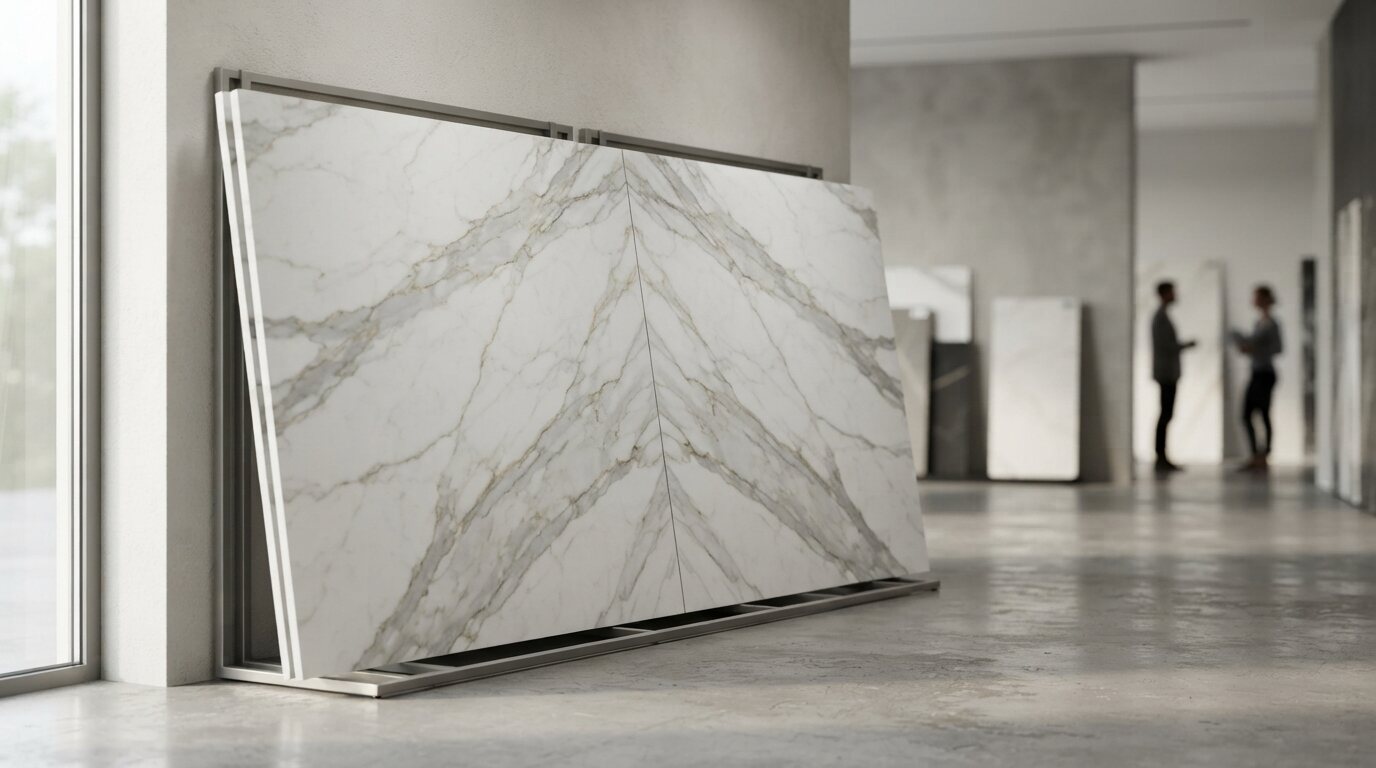
Large-format sintered stone slabs from China are gaining popularity for a wide range of building projects, from luxury villas to commercial developments. These engineered surfaces offer impressive durability, heat resistance, and a non-porous finish, making them suitable for demanding applications. Their large sizes minimize grout lines, creating a sleek, expansive look that many buyers seek.
However, sourcing and installing these materials requires careful planning and understanding of their unique properties. From selecting the right thickness for your application to ensuring proper handling and fabrication, there are specific considerations when purchasing sintered stone slabs China directly from factories. This guide will walk you through the essential details to help you make informed decisions.
Sintered Stone Slab Formats and Recommended Thicknesses
Sintered stone slabs are manufactured under extreme pressure and heat, resulting in a dense, robust material. One of their key advantages is the availability of large formats, which reduce visible seams and create a more continuous aesthetic. Common slab sizes you’ll find from Chinese factories typically include:
- 2400 x 1200 mm (approx. 94.5 x 47.2 inches)
- 2700 x 1200 mm (approx. 106.3 x 47.2 inches)
- 2800 x 1600 mm (approx. 110.2 x 63 inches)
- 3200 x 1600 mm (approx. 126 x 63 inches)
While these are standard, some manufacturers can produce even larger sizes, though these may come with higher costs and more complex logistics. The thickness of the slab is crucial and depends entirely on its intended application. Choosing the wrong thickness can lead to issues with durability, stability, or even installation difficulties.
Thickness by Application
Here’s a general guide to typical sintered stone thicknesses and their most common uses:
| Thickness | Typical Applications | Considerations |
|---|---|---|
| 3 mm (0.12 inch) | Wall cladding, furniture surfacing (cabinet doors, wardrobe panels), decorative elements, backsplash | Lightweight, requires a strong and flat substrate. Best for vertical applications where structural support is provided by the underlying surface. |
| 6 mm (0.24 inch) | Wall cladding, shower walls, light-traffic flooring, furniture tops, table tops (with support) | More robust than 3mm, suitable for larger vertical areas. Can be used for flooring in residential or low-traffic commercial settings. |
| 9 mm (0.35 inch) | Residential countertops (kitchen, bathroom), medium-traffic flooring, exterior wall cladding (with proper framing) | Good balance of strength and weight. Common for kitchen islands and vanity tops where direct heavy impact is less frequent. |
| 12 mm (0.47 inch) | High-traffic flooring, kitchen countertops, commercial countertops, exterior facades | Most common and versatile thickness for countertops and heavy-duty flooring. Offers excellent impact resistance and stability. |
| 15 mm – 20 mm (0.59 – 0.79 inch) | Heavy-duty commercial countertops, exterior paving, structural elements, custom applications | Provides maximum strength and durability. Often used in demanding commercial environments or for specific architectural designs requiring extra robustness. |
For flooring applications, we often recommend thicker slabs (9mm or 12mm) to withstand foot traffic and potential impacts. For walls, thinner slabs (3mm or 6mm) are usually sufficient and reduce the overall weight on the structure.
Handling and Preventing Breakage During Transport and Installation
Due to their large size and inherent rigidity, sintered stone slabs are prone to breakage if not handled correctly. This is especially true for thinner slabs (3mm and 6mm). Breakage is a common and costly mistake, so proper procedures are paramount from the factory to the final installation site.
- Specialized Packaging: Slabs should always be transported vertically in sturdy A-frames or wooden crates. These frames are designed to support the slabs along their entire length and prevent flexing. Edges and corners should be protected with foam or cardboard.
- Vertical Transport: Never lay large slabs flat during transport unless they are fully supported across their entire surface, which is rarely practical. Vertical transport minimizes stress.
- Lifting Equipment: Manual handling of large slabs is extremely risky. Specialized lifting frames with multiple suction cups are essential. For very large or heavy slabs, cranes or forklifts with appropriate attachments are necessary. A team of skilled installers is always required, typically 4-6 people for a large kitchen island slab.
- Even Support: During storage and installation, ensure the slab is always supported evenly across its entire surface. Any uneven pressure points can cause cracking.
- Edge and Corner Protection: These are the most vulnerable areas. Even a slight bump can cause a chip or crack that propagates across the slab.
We always advise buyers to discuss packaging and handling procedures with the factory before confirming an order. A small investment in better packaging can save significant costs in replacing damaged materials.
Fabrication and Installation Considerations
Working with sintered stone requires specialized tools and expertise. Unlike natural stone or quartz, sintered stone’s extreme hardness and density demand specific techniques for cutting, polishing, and shaping.
- Cutting: Diamond blades are essential for cutting sintered stone. Wet cutting is highly recommended to keep the blade cool, minimize dust, and ensure a clean cut. Dry cutting can overheat the material, leading to chipping or even cracking. CNC machines provide the most precise and clean cuts, especially for complex shapes or sink cutouts.
- Edge Finishing: Common edge profiles include eased, bullnose, mitered, and waterfall edges. For a seamless look, many designs use mitered edges, where two pieces are cut at a 45-degree angle and joined, creating the appearance of a thicker, solid piece.
- Cutouts: Sink and cooktop cutouts are particularly vulnerable areas. Corners of cutouts should be rounded (radiused) to prevent stress concentrations that can lead to cracks. Reinforcement around cutouts with mesh or fiberglass can add strength.
- Adhesives: Specialized epoxy or polyurethane adhesives are used to join sintered stone pieces. These adhesives are formulated to bond strongly to the non-porous surface and are often color-matched for seamless joints.
- Installation: For countertops, a perfectly level and sturdy cabinet base is critical. For flooring, a flat, clean, and stable subfloor is necessary, along with appropriate flexible thin-set mortar. For wall cladding, mechanical fastening systems are often used for larger or exterior panels, in addition to adhesive.
While some fabrication can be done on-site, complex cuts and finishes are best performed in a factory setting with specialized equipment. This ensures higher precision and reduces the risk of errors or damage.
Typical Price Ranges for Sintered Stone Slabs China
The cost of sintered stone slabs from China varies significantly based on several factors, including thickness, size, pattern complexity, finish (matte, polished, satin), and order volume. Generally, larger and thicker slabs, as well as those with intricate or unique patterns (like high-definition marble or exotic stone replicas), will be more expensive.
Here are typical FOB (Free On Board) price ranges per square meter for raw slabs, directly from Chinese factories:
- 3 mm thick: US$20 – US$40 per square meter
- 6 mm thick: US$30 – US$60 per square meter
- 9 mm – 12 mm thick: US$40 – US$90 per square meter
- 15 mm – 20 mm thick: US$60 – US$120+ per square meter
These prices are for the raw slabs only and do not include fabrication (cutting, edge profiling, cutouts), packaging (A-frames can add US$50-US$100 per frame), or shipping costs. Minimum Order Quantities (MOQs) typically range from 50 to 100 square meters per color or pattern. For smaller quantities, factories may charge a premium or require you to purchase from existing stock.
Sourcing Sintered Stone Slabs in China: Factories and Lead Times
The primary hub for sourcing large-format sintered stone slabs China is Foshan, Guangdong province, particularly in and around Nanzhuang Town. This area is renowned globally for its vast concentration of ceramic tile and stone factories. You can find a huge variety of designs, finishes, and qualities here. Many manufacturers have impressive showrooms where you can see the slabs in various applications.
Factories in Nanzhuang range from large-scale, highly automated operations with strict quality control to smaller workshops. It’s crucial to visit or have a representative inspect the factory and their production capabilities. Quality can vary significantly between manufacturers, especially regarding pattern consistency, flatness, and edge quality.
Typical lead times for standard sintered stone slab orders are usually between 15 to 30 days from the confirmation of the order and receipt of the deposit. Custom patterns, very large quantities, or non-standard thicknesses can extend lead times to 45 days or more. It’s important to factor in ocean shipping times, which can add another 20-45 days depending on your destination. For more on sourcing in Foshan, see our guide to Foshan building materials markets.
What to Confirm Before Ordering Sintered Stone Slabs
To avoid costly mistakes and ensure you receive the correct materials, confirm the following details with your supplier:
- Exact Dimensions and Thickness: Double-check the precise length, width, and thickness of each slab.
- Finish: Specify matte, polished, satin, or textured finish.
- Pattern and Color Consistency: Request samples or high-resolution photos/videos of the actual batch to ensure the veining and color meet your expectations. Discuss acceptable variation.
- Edge Profile Requirements: If factory fabrication is included, provide detailed drawings for edge profiles and cutouts.
- Packaging Details: Confirm the type of A-frame or crating, corner protection, and number of slabs per frame.
- Inspection Process: Clarify if a third-party inspection is allowed before loading, and what the factory’s quality control process entails.
- Lead Time and Payment Terms: Get a clear timeline for production and shipping, and understand the deposit and balance payment schedule.
- Shipping Terms: Confirm FOB port and discuss options for container loading (e.g., full container load for optimal cost efficiency). For more on logistics, refer to our page on shipping from China.
Navigating the complexities of sourcing large-format sintered stone slabs from China, from factory selection to quality control and logistics, can be challenging. We specialize in helping international buyers like you streamline this process. Our team on the ground in Foshan can assist with factory vetting, order negotiation, quality inspections, and managing shipping, ensuring your materials arrive as expected. Learn more about how our sourcing agent service can support your project, whether you’re buying ceramic tiles or stone.
By understanding the specifics of sintered stone and carefully managing the sourcing process, you can successfully integrate these beautiful and durable materials into your next project. Careful planning will ensure a smooth experience from order to installation.
Planning to buy building materials in Foshan?
Tell us what you need and when you plan to come. We reply the same day with a realistic plan, price ranges and which markets to visit.