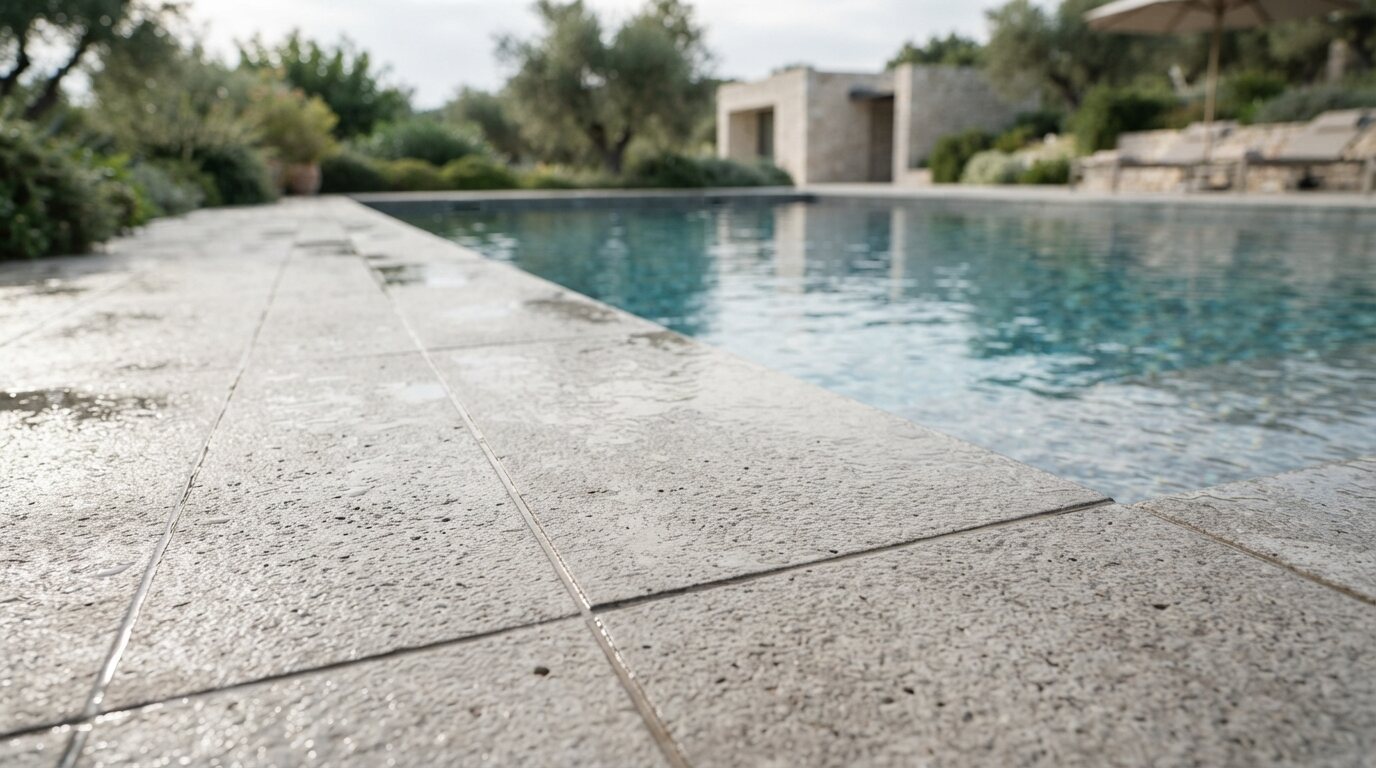
When planning a construction project or renovation, safety is paramount, especially in areas prone to wetness or spills. Choosing the right anti-slip tiles is a critical decision, not just for compliance but for the well-being of users. Sourcing anti-slip tiles China offers a vast selection and competitive pricing, but understanding the technical specifications and ensuring quality is essential.
This guide will walk you through the key ratings, common applications, and practical considerations for selecting anti-slip tiles, ensuring you make informed decisions for your project. We’ll cover everything from R-ratings to barefoot classifications, helping you navigate the options available from Chinese manufacturers.
Understanding Anti-Slip Ratings: The R-Value (DIN 51130)
The most common rating for slip resistance in Europe, and widely adopted by Chinese manufacturers for export, is the R-value, based on the German standard DIN 51130. This test involves a person walking in safety boots on a tiled ramp coated with engine oil, with the ramp’s inclination gradually increased until the person slips. The angle at which slipping occurs determines the R-rating.
It’s important to understand that the R-value is specifically for areas where people wear shoes and where contaminants like oil, grease, or dirt might be present. It does not directly apply to barefoot wet areas, which have a separate classification.
R9 to R13: What They Mean and Where to Use Them
The R-ratings range from R9 (lowest slip resistance) to R13 (highest slip resistance). A higher R-value means the tile provides better grip under oily or greasy conditions.
- R9: Offers minimal slip resistance. Suitable for dry indoor areas with light foot traffic, such as general living spaces, offices, or corridors where contamination is unlikely.
- R10: A moderate level of slip resistance. Commonly used in residential bathrooms, kitchens, balconies, and light commercial areas where occasional spills might occur.
- R11: Good slip resistance, ideal for wet areas like commercial kitchens, utility rooms, outdoor terraces, and pool surrounds where water is frequently present, but not necessarily barefoot traffic.
- R12: Very high slip resistance. Recommended for industrial kitchens, workshops, car washes, and areas with heavy water or grease exposure.
- R13: The highest level of slip resistance. Reserved for extremely demanding environments such as food processing plants, industrial facilities, or areas with persistent heavy contamination.
Here’s a quick reference table for R-ratings:
| R-Rating | Slip Angle | Typical Application (Shod Feet) |
|---|---|---|
| R9 | 6-10° | Dry indoor areas, general purpose, offices |
| R10 | 10-19° | Residential bathrooms, kitchens, balconies, light commercial |
| R11 | 19-27° | Commercial kitchens, utility rooms, outdoor terraces, pool surrounds (shod) |
| R12 | 27-35° | Industrial kitchens, workshops, car washes, heavy grease/water areas |
| R13 | >35° | Food processing plants, very demanding industrial environments |
Wet Barefoot Areas: A, B, C Classification (DIN 51097)
For areas where people walk barefoot on wet surfaces, the R-rating is not sufficient. Instead, a separate classification system (DIN 51097) is used, categorizing tiles into classes A, B, and C based on their slip resistance when wet and barefoot.
This test also uses a ramp, but the person is barefoot, and water is used instead of oil. The inclination angle at which slipping occurs determines the class.
Class A, B, C: For Pool Decks, Showers, and Changing Rooms
- Class A: Suitable for dry barefoot areas like changing rooms, locker rooms, or general walkways in spas where water might only occasionally be present. The minimum slip angle is >12°.
- Class B: Provides good slip resistance for wet barefoot areas. This is the common recommendation for showers, pool surrounds (both indoor and outdoor), and areas with standing water. The minimum slip angle is >18°.
- Class C: Offers the highest slip resistance for barefoot traffic in very wet or inclined areas. This class is typically specified for inclined pool edges, steps leading into pools, or wet ramps. The minimum slip angle is >24°.
Here’s a quick reference table for barefoot ratings:
| Barefoot Class | Slip Angle | Typical Application (Barefoot) |
|---|---|---|
| Class A | >12° | Changing rooms, dry areas in spas, locker rooms |
| Class B | >18° | Showers, pool surrounds, general wet barefoot areas |
| Class C | >24° | Inclined pool edges, wet ramps, deep end surrounds |
Combining R-Ratings and Barefoot Classes for Specific Applications
For some areas, you might need to consider both ratings. For instance, an outdoor terrace might see both shod and barefoot traffic, and could be exposed to rain or spills. In such cases, you’d look for a tile that meets both an appropriate R-rating and a barefoot class.
It’s crucial to specify the correct rating for your project. Over-specifying a very high R-rating for a residential bathroom, for example, might lead to a tile that is difficult to clean, even if it offers superior grip.
Common Applications for Anti-Slip Tiles from China
Chinese factories produce a wide range of anti-slip tiles suitable for various applications. Here are some typical recommendations:
- Residential Bathrooms & Showers: For bathrooms, an R10 rating is often sufficient. For shower floors where barefoot wet traffic is constant, a combination of R10/Class A or B is recommended. Consider a smaller tile size (e.g., 30x30cm or mosaics) or a tile with specific drainage grooves to enhance safety.
- Pool Decks & Surrounds: These areas require excellent barefoot slip resistance. We typically recommend R11/Class B or C for pool surrounds, depending on the incline and expected water volume. Tiles with textured surfaces or specific profiles are common. Ensure proper drainage is also designed to prevent standing water.
- Outdoor Terraces & Balconies: Exposed to rain and potentially other contaminants, these areas benefit from at least an R10 or R11 rating. If barefoot traffic is common, consider a tile with a Class A or B rating as well. Porcelain stoneware is a popular choice due to its durability and low water absorption.
- Commercial Kitchens & Industrial Areas: These environments demand high slip resistance due to constant spills of water, oil, and food. R12 or R13 tiles are typically required, often with a very coarse or structured surface.
- Public Walkways & Ramps: For commercial or public spaces, an R11 or R12 rating is usually specified, especially for ramps or entrances that might become wet.
Texture, Cleaning, and Maintenance
A critical consideration when choosing anti-slip tiles is the relationship between slip resistance and ease of cleaning. Generally, the higher the R-rating or barefoot class, the more textured the tile surface will be. This texture, whether it’s a rough finish, raised dots, or grooves, is what provides the increased grip.
However, these textured surfaces can also trap dirt, grime, and cleaning residues more easily than smooth tiles. This means:
- Cleaning Challenges: Tiles with R12, R13, or Class C ratings will require more rigorous cleaning methods, potentially using brushes, specific detergents, or even pressure washers in commercial settings.
- Residential vs. Commercial: For residential use, balance safety with practicality. An R10/Class A or B tile might be easier to maintain in a home bathroom than an R12/Class C tile, while still providing adequate safety.
- Surface Treatments: Some anti-slip tiles achieve their rating through a special glaze or by incorporating abrasive particles into the surface. Others have a distinct relief or structured pattern. Understand the surface type to anticipate cleaning needs.
- Grout Lines: Smaller tiles mean more grout lines, which can also trap dirt. Consider grout color and type (e.g., epoxy grout for high-traffic, wet areas) to aid maintenance.
Always ask your supplier for cleaning recommendations specific to the anti-slip tile you choose.
Sourcing Anti-Slip Tiles from China: What to Look For
Foshan, China, is the world’s largest production hub for ceramic tiles, offering an immense variety of anti-slip options. When sourcing here, keep these points in mind:
- MOQs (Minimum Order Quantities): Most factories in Foshan prefer to sell in container loads. For standard anti-slip porcelain tiles, expect MOQs of typically 500-1000 square meters (roughly one 20-foot container), depending on the tile size and specific product line. Smaller quantities might be available from distributors or for specific stock items, but often at a higher price.
- Typical Price Ranges: Prices for anti-slip porcelain tiles from China can vary significantly based on size, finish, thickness, and the specific R-rating/barefoot class. You can expect to pay anywhere from USD 5 to USD 25 per square meter for good quality anti-slip porcelain, excluding shipping. Higher-end designs or very high R-rated industrial tiles might be more.
- Lead Times: Once an order is confirmed, production lead times typically range from 15 to 30 days for custom orders or items not in immediate stock. This is in addition to the shipping time from China to your destination.
- Visiting the Market: If you have a large project, visiting the Foshan building materials market can be invaluable. You can see physical samples, compare textures, and discuss specifications directly with factory representatives.
Getting Test Reports: Your Verification
This is perhaps the most critical step when ordering anti-slip tiles from China. Do not rely solely on a factory’s claim of an R-rating or barefoot class. Always request official test reports.
- Third-Party Certification: Look for test reports issued by independent, accredited testing laboratories. These reports should clearly state the R-rating (DIN 51130) and/or the barefoot class (DIN 51097) for the specific tile you are interested in.
- Sample Verification: If possible, obtain samples of the exact tile you plan to order and ensure the test reports match these samples.
- Validity: Check the date of the test report to ensure it is recent and still valid for the current production batch.
What to Confirm Before Ordering
To avoid misunderstandings and ensure you get the right product, use this checklist before finalizing your order:
- Specific R-rating (DIN 51130) and/or Barefoot Class (DIN 51097) required: Clearly state your needs.
- Official Test Reports: Confirm these are available and from an independent lab.
- Tile Material and Thickness: Typically porcelain stoneware for durability and low water absorption. Common thicknesses are 9mm, 10mm, or 12mm for outdoor/heavy-duty use.
- Surface Finish and Texture: Request physical samples to assess the feel and appearance.
- Minimum Order Quantity (MOQ): Confirm you meet the factory’s requirements.
- Packaging Details: How many pieces per carton, how many square meters per pallet, and overall container loading capacity.
- Production Lead Time: Get a firm commitment on the manufacturing schedule.
- Cleaning and Maintenance Recommendations: Understand how to properly care for the tiles.
- Shipping Terms: Clarify Incoterms (e.g., FOB, CIF) and understand shipping from China logistics.
Navigating the complexities of sourcing building materials from China, especially highly technical products like anti-slip tiles, can be challenging. Our sourcing agent service helps buyers verify factory capabilities, review test reports, manage quality control, and streamline the entire procurement process, ensuring your specifications are met.
By carefully considering the ratings, applications, and maintenance aspects, you can confidently select anti-slip tiles that provide both safety and aesthetic appeal for your project. Prioritizing safety through informed choices is always a wise investment.
Planning to buy building materials in Foshan?
Tell us what you need and when you plan to come. We reply the same day with a realistic plan, price ranges and which markets to visit.