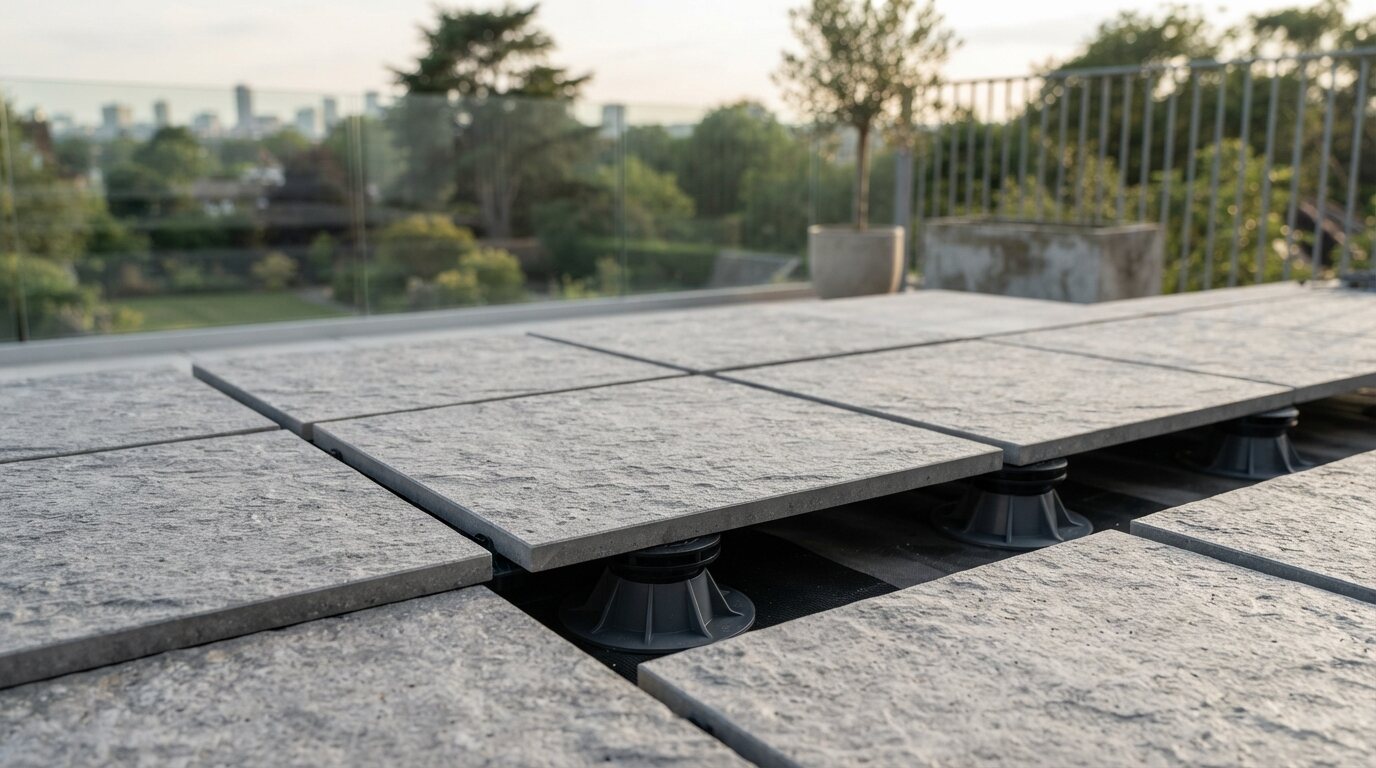
When planning outdoor living spaces, durability, aesthetics, and low maintenance are key. This is where 20mm porcelain pavers from China excel. These thick, robust tiles are specifically engineered for exterior applications, offering superior strength and resistance to weather, wear, and heavy loads compared to standard indoor tiles.
As an independent sourcing agent in Foshan, China, we help villa owners, developers, and importers secure high-quality building materials directly from factories. We’ve seen a significant increase in demand for these 20mm porcelain pavers for various projects, from luxurious rooftop terraces to robust commercial pathways. Understanding the options for formats, load ratings, installation systems, pricing, and packing is crucial for a successful purchase.
Introduction to 20mm Porcelain Pavers from China
20mm porcelain pavers are a specialized category of ceramic tiles designed for outdoor use. Their increased thickness provides exceptional strength, making them suitable for installation on pedestals, gravel, or sand beds without the need for traditional mortar. This allows for excellent drainage, easier access to sub-surfaces, and simplified leveling on uneven ground.
The manufacturing process for these pavers involves firing high-quality clay, feldspar, and silica at extremely high temperatures, resulting in a dense, non-porous material. This gives them a water absorption rate typically below 0.5%, making them highly resistant to frost, stains, and chemicals. Furthermore, they are inherently slip-resistant, UV-stable, and resistant to moss and mold growth, making them an ideal, long-lasting solution for patios, walkways, pool decks, and even light vehicle traffic areas.
Key Technical Specifications and Formats
When sourcing 20mm porcelain pavers, understanding the technical specifications is vital. Beyond the 20mm thickness, which provides the necessary structural integrity, other factors like slip resistance and breaking strength are critical for safety and longevity.
- Slip Resistance: For outdoor applications, a slip resistance rating of R10 or R11 (according to DIN 51130) is generally recommended, with R12 suitable for areas prone to water or heavy foot traffic.
- Water Absorption: As mentioned, true porcelain will have a water absorption rate of less than 0.5%, ensuring frost resistance and stain protection.
- Breaking Strength: Typically, 20mm pavers will have a breaking strength exceeding 9,000 N and a flexural strength greater than 45 N/mm², making them extremely durable.
Common formats for 20mm porcelain pavers are designed to mimic natural stone or wood, offering a sophisticated aesthetic. Rectified edges are standard, allowing for minimal grout lines and a clean, modern look. Popular sizes include:
- 600x600mm (most common square format)
- 600x900mm
- 300x1200mm
- 400x1200mm
- 800x800mm
- 900x900mm
- 1200x600mm (often used for a plank or large format look)
Finishes range from natural stone effects (granite, slate, travertine) to wood grain textures and contemporary concrete looks. Many factories in Foshan specialize in producing a wide array of these designs, offering buyers extensive choices. You can explore more options for various tile types on our ceramic tiles catalog page.
Detailed Guide to Installation Systems: Pedestal, Gravel, and Sand
One of the primary advantages of 20mm porcelain pavers is their versatility in installation. Unlike thinner tiles that require a fully bonded mortar bed, these thicker pavers can be dry-laid using various systems, each with unique benefits.
Pedestal System Installation
The pedestal system is ideal for creating raised floors on rooftops, balconies, terraces, and other areas where drainage, ventilation, or access to utilities beneath the surface is required. It involves placing the pavers on adjustable plastic pedestals.
- Benefits: Excellent drainage (water flows through open joints and off the sub-surface), allows for easy inspection and maintenance of membranes or pipes, compensates for uneven sub-surfaces, and provides a perfectly level finished surface.
- Components: Adjustable plastic pedestals (typically 10mm to over 1000mm in height), spacer tabs (for consistent joint width), and sometimes rubber shims for sound dampening or minor height adjustments.
- Process: The sub-surface (e.g., concrete slab with waterproofing membrane) is prepared. Pedestals are placed at the corners of each paver, adjusted to the desired height, and the pavers are laid on top.
- Load Bearing: A single 20mm porcelain paver on four pedestals can typically withstand a distributed load of 500-1000 kg per square meter, depending on the paver’s strength and pedestal quality.
Gravel Bed Installation
Installing 20mm pavers on a gravel bed is a popular, permeable, and relatively straightforward method suitable for patios, garden paths, and walkways.
- Benefits: Good drainage, permeable surface, cost-effective for larger areas, natural aesthetic.
- Process: A stable, compacted sub-base (e.g., compacted soil or crushed aggregate) is prepared. A geotextile fabric is often laid to prevent weed growth and mixing of layers. A layer of crushed gravel (typically 10-15cm thick, 5-20mm aggregate size) is spread and leveled. The pavers are then carefully placed directly onto the leveled gravel, ensuring stability.
- Joints: Joints can be filled with fine gravel, polymeric sand, or left open for maximum permeability.
Sand Bed Installation
Similar to laying natural stone or concrete pavers, a sand bed offers a traditional and economical installation method for 20mm porcelain pavers, suitable for patios, courtyards, and even light-traffic driveways.
- Benefits: Cost-effective, good for large areas, relatively easy to install.
- Process: A well-compacted, stable sub-base is essential. A 3-5cm layer of coarse bedding sand (washed, sharp sand) is spread evenly and screeded to the desired level. The pavers are then laid directly onto the sand, gently tapped into place with a rubber mallet to ensure full contact and levelness.
- Joints: After laying, the joints are filled with polymeric sand or fine sand, which is then compacted and wetted to lock the pavers in place.
Here’s a quick comparison of the three common installation systems:
| Feature | Pedestal System | Gravel Bed | Sand Bed |
|---|---|---|---|
| Sub-surface | Waterproofed concrete slab | Compacted soil/aggregate | Compacted soil/aggregate |
| Drainage | Excellent (open joints) | Good (permeable) | Moderate (permeable joints) |
| Leveling | Highly adjustable | Moderate adjustment | Moderate adjustment |
| Access to Sub-surface | Easy (lift pavers) | Difficult (dig up) | Difficult (dig up) |
| Typical Cost | Higher (pedestals) | Moderate | Lower |
| Best For | Rooftops, balconies, terraces | Patios, garden paths | Patios, courtyards, light driveways |
Understanding Pricing, MOQs, and Sourcing Location
China is a global leader in ceramic tile production, with Foshan in Guangdong province being the undisputed hub. Factories here benefit from advanced technology, economies of scale, and efficient supply chains, allowing them to offer competitive pricing for 20mm porcelain pavers.
Typical FOB (Free On Board) prices for standard 600x600mm or 600x900mm 20mm porcelain pavers from Chinese factories generally range from USD 10 to USD 25 per square meter. This price can vary significantly based on:
- Design Complexity: Highly intricate patterns or realistic stone/wood reproductions may be at the higher end.
- Finish: Specialized anti-slip textures or polished finishes can influence cost.
- Order Volume: Larger orders typically receive better per-square-meter pricing.
- Factory Brand: Some well-known factories might command slightly higher prices for their perceived quality and consistency.
Minimum Order Quantities (MOQs) for custom production of 20mm porcelain pavers typically range from 500 to 1,000 square meters, which usually translates to 1-2 full 20-foot containers. For smaller quantities, it’s possible to find factories that have stock of popular designs, but choices might be limited, and prices could be slightly higher. Visiting the Foshan building materials markets can give you a direct sense of the variety and pricing.
Packing, Lead Times, and Shipping Logistics
Proper packing is critical for 20mm porcelain pavers due to their weight and fragility during transit. Factories typically pack them securely to prevent damage.
- Packing Method: Pavers are usually packed in sturdy cartons, then stacked on robust wooden pallets. Each pallet is wrapped in plastic film, and often reinforced with plastic or metal strapping. Cardboard or foam corner protectors are common.
- Weight: 20mm porcelain pavers are heavy, typically weighing around 40-45 kg per square meter.
- Container Loading: A standard 20-foot shipping container can usually hold approximately 500-600 square meters of 20mm pavers, depending on the specific size and weight, equating to roughly 20-25 tons. Careful loading and bracing are essential to prevent shifting during ocean transit.
- Lead Times: For production of a new order, expect a lead time of 15-30 days from order confirmation to readiness for shipping. This does not include the ocean transit time, which varies greatly depending on the destination (e.g., 15-25 days to Southeast Asia, 25-40 days to Europe, 30-50 days to North America). You can learn more about the process on our shipping from China page.
What to Confirm Before Ordering 20mm Porcelain Pavers
To ensure your order meets your project’s specific requirements, we recommend confirming the following details with your supplier:
- Specific Format and Thickness: Clearly state the exact dimensions (e.g., 600x600x20mm).
- Slip Rating (R-value): Confirm the R-value is appropriate for your outdoor application (e.g., R11).
- Breaking Strength: Request the technical data sheet confirming breaking strength (e.g., >9000 N).
- Water Absorption Rate: Ensure it’s <0.5% for frost resistance.
- Finish and Design: Provide clear images or samples of the desired texture and pattern (e.g., matte, wood-look, specific color tones).
- Color Consistency: Ask about batch variation and confirm if samples represent the production run.
- Packing Details: Specify pallet type (e.g., fumigated wood for certain countries), quantity per pallet, and overall container loading plan.
- Lead Time: Get a firm commitment on production time and readiness for shipment.
- Payment Terms: Understand the deposit, balance, and payment methods.
- Minimum Order Quantity (MOQ): Confirm the MOQ for your chosen design and size.
Navigating the complexities of sourcing 20mm porcelain pavers from China, from factory selection and quality control to logistics and customs, can be challenging. We offer a comprehensive sourcing agent service, handling factory negotiations, quality inspections, and shipping arrangements on your behalf, ensuring you receive the correct materials without hassle. Visit our sourcing agent page to learn more about how we can assist your project.
By carefully considering these factors, you can confidently source high-quality 20mm porcelain pavers for your outdoor projects. Their durability and aesthetic appeal make them a smart long-term investment.
Planning to buy building materials in Foshan?
Tell us what you need and when you plan to come. We reply the same day with a realistic plan, price ranges and which markets to visit.