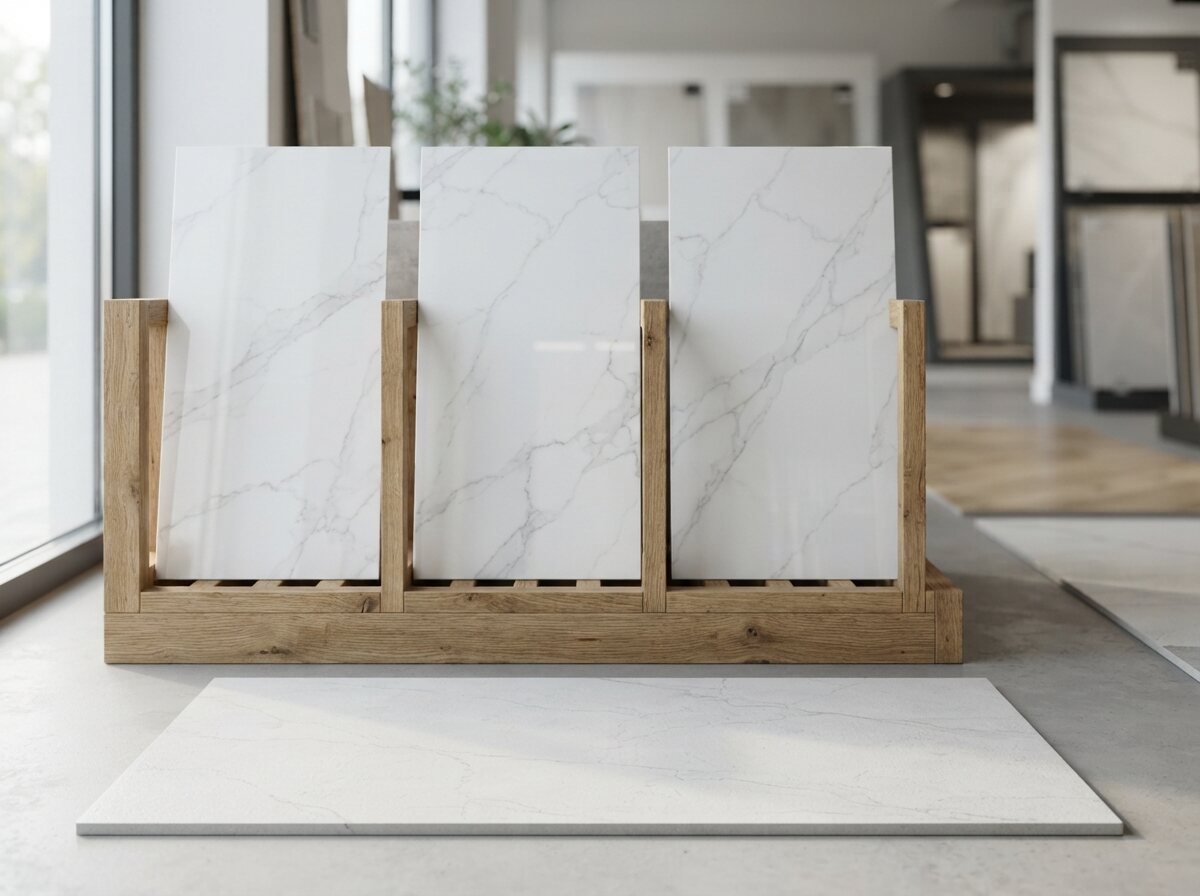
Every tile carton from a Chinese kiln carries a grade mark. Buyers see “AAA” in showrooms and “Grade A” on invoices and assume they mean the same thing. They usually do, but the terms are informal; the labels that matter are the Chinese ones on the box.
The three grades
- 优等品 (yōuděngpǐn) – first choice. Meets the national standard GB/T 4100 for dimensions, surface quality and physical properties with the tightest cosmetic tolerance. This is what is sold as “AAA”, “Grade A” or “premium” abroad.
- 一级品 (yījípǐn) – second grade. Minor visible defects allowed under standard viewing conditions; dimensional tolerance slightly wider. Typically 15–25% cheaper.
- 合格品 (hégépǐn) – third grade / qualified. Passes physical tests but with visible cosmetic defects. Fine for a garage; not for a living room.
What grading does not cover
Grade is about defects, not about design consistency between batches. Two other codes on the carton decide whether your floor looks uniform:
- Shade / colour number (色号) – a letter or number indicating the firing batch’s colour. Mixing shades on one floor is the most common complaint we see.
- Calibre / size code (尺码) – the actual fired size within tolerance (e.g. 798, 800, 802 mm). Mixing calibres produces uneven joints.
How to buy safely
- Write the grade in Chinese on the pro-forma.
- Require one shade and one calibre for the whole quantity of each design, and have the batch numbers written on the invoice.
- Keep a sealed reference tile.
- At inspection, open cartons from several pallets and compare against the reference in daylight.
- Order 5–8% extra so you never have to top up from a different batch later.
More in the tile buying guide.
Planning to buy building materials in Foshan?
Tell us what you need and when you plan to come. We aim to reply the same business day with a realistic plan, price ranges and which markets to visit.